
Cautious optimism as record year for Hen Harrier chicks at RSPB Geltsdale

By Conservation Correspondent
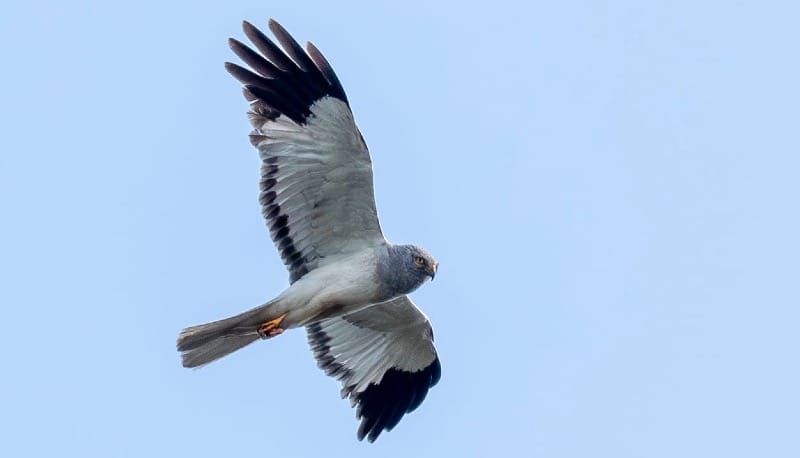
Thirteen young Hen Harriers have fledged at RSPB Geltsdale in Cumbria, making it the reserve’s best breeding season for the species in more than a century.
The 13 chicks, from three nests, are the highest number to successfully fledge at Geltsdale in a single breeding season since records began.
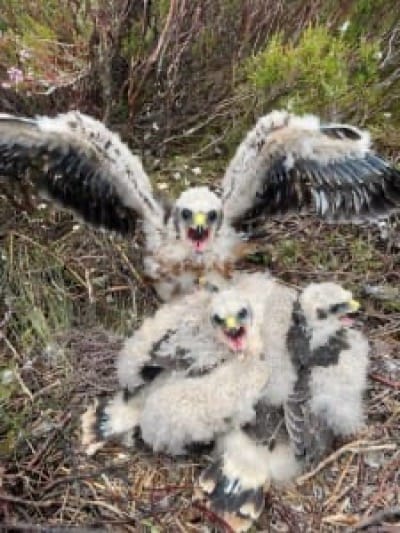
Staff and volunteers closely monitored the nesting birds throughout the season, including overnight checks.
Natural England-licensed diversionary feeding stations were also used to help reduce the adults’ need to prey on grouse while feeding their young.
Ian Ryding, reserve manager at RSPB Geltsdale, said: “Thirteen chicks fledging is a fantastic result.”
Hen Harriers are known for their spectacular ‘sky dancing’, when males pass food to females in flight. But the species remains on the UK Red List and is still found at only a small number of sites in England.
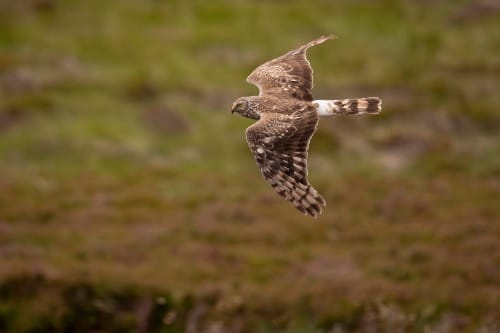
Hen Harriers were hunted to extinction as a breeding bird in England by 1900 before returning to the northern Pennines in the 1950s. The RSPB says illegal persecution continues to be a major barrier to their recovery, particularly around areas managed for grouse shooting.
Government estimates suggest England’s uplands could support at least 300 pairs of Hen Harriers.
Several of the Geltsdale chicks have already been tagged, allowing their movements to be tracked as they leave the reserve.
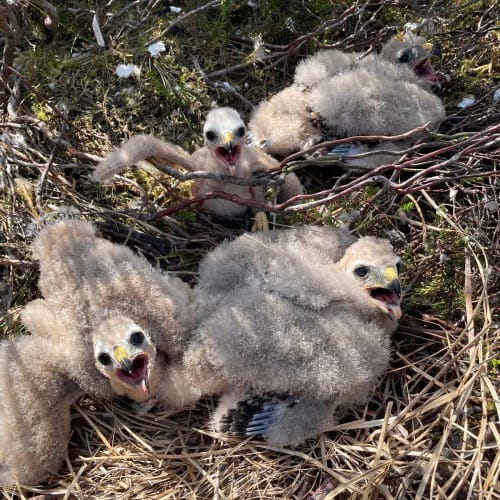
The hope is that some will eventually return to breed.
“The challenge is ensuring they survive long enough to return and raise families of theirown,” said Ryding.
DON'T MISS:
 Good News Post
The RSPB is calling for licensing of gamebird shooting across the UK. It points to the grouse moor licensing system introduced in Scotland in 2024 as one possible approach.
For now, the 13 young Hen Harriers taking to the skies above Geltsdale provide a welcome boost for a species still facing significant challenges.