London Ambulance Service midwife and paramedic help deliver care after Venezuela earthquakes

By Community Correspondent
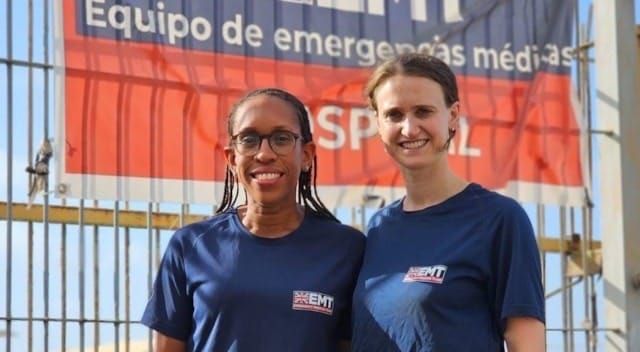
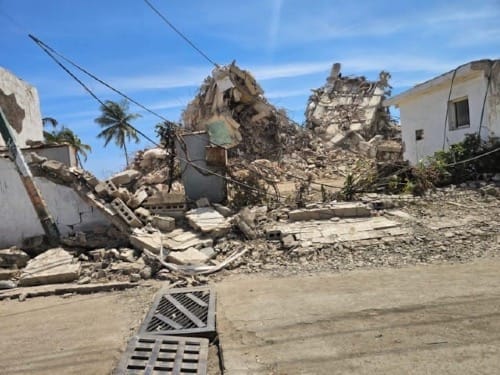
A London Ambulance Service midwife and paramedic have returned home after helping care for people affected by devastating earthquakes in Venezuela, which killed more than 6,000 people.
Camella Main and Advanced Paramedic Kat Spence were part of the UK Emergency Medical Team sent by the British Government to work at a field hospital in central La Guaira.
The hospital provided emergency and primary care, maternity services, paediatrics and rehabilitation. Teams also travelled into local communities in mobile clinics where access to healthcare was limited.
Treating the wider impact of the disaster
Kat, who is based at Deptford Ambulance Station, worked mainly in primary care. Many patients were dealing with health problems made worse by losing their homes, medication or access to their usual healthcare.
She said:
“A lot of people had lost their homes, their medication or access to the healthcare they would normally rely on.”
Working with limited resources was also a challenge.
“You had to rely heavily on your clinical assessment and decision-making, work with what was available and constantly adapt,” Kat said.
She also highlighted the support of local healthcare workers, describing their knowledge and experience as “incredible”.
Keeping maternity services going
For Camella, the deployment highlighted the importance of continuing maternity care during a disaster.
Around 2,000 pregnant women in La Guaira were estimated to need maternal healthcare support, while many maternity services had been disrupted by the earthquake.
Camella worked in the field hospital and mobile clinics, providing antenatal and postnatal care, contraception, STI screening and other sexual and reproductive healthcare.
One patient came to the hospital for a review of her contraceptive implant. Camella's checks revealed she was actually 22 weeks pregnant.
The woman had become homeless following the earthquakes and had believed she was going through the menopause.
Camella said she was “incredibly happy” when she discovered she was expecting, describing the baby as a miracle that had brought hope to her family.
“Being able to perform tests, provide her with some health advice and ensure she knew how to stay safe in pregnancy was a real honour,” she said.
Taking care beyond the hospital
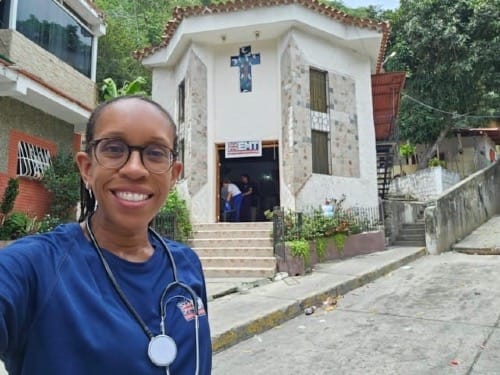
Kat and Camella also worked in mobile clinics, taking healthcare into communities some distance from the field hospital.
One of Kat's clinics was held inside a small local church, with the pews used as consultation areas.
The welcome from local people made a lasting impression.
The community brought the team a large pot of homemade pumpkin soup as a thank you.
“It was such a simple gesture, but it really captured the warmth and generosity we experienced throughout the deployment,” Kat said.
‘A challenge and a privilege’
Kat said the scale of the loss and grief was unlike anything she had experienced during her career, but she was equally struck by the resilience of the people she met.
“Despite everything they had been through, there was such a strong sense of community, hope and solidarity.”
Camella described caring for women with limited resources as both challenging and rewarding.
“Caring for perinatal women during such a vulnerable time with limited resources and equipment was a challenge and a privilege,” she said.
She added that the experience had given her skills and lessons that would be valuable in her work with London Ambulance Service.
UK Minister for Development Kirsty McNeill also paid tribute to the UK Emergency Medical Team, saying:
“I pay tribute to the extraordinary people, like Camella and Kat, who put themselves in harm’s way to save lives.”