Ocean Bacteria Team Up to Break Down Biodegradable Plastic

By Science Correspondent
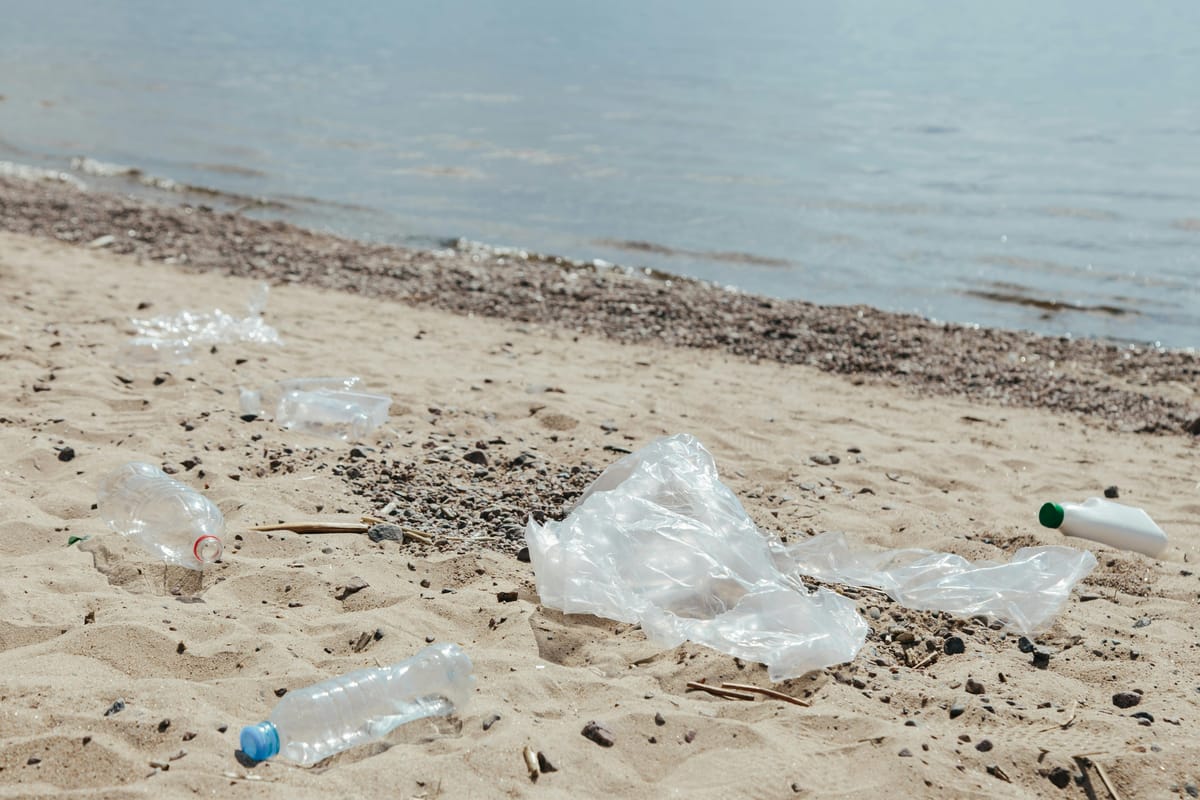
Scientists have uncovered a surprising secret in the fight against plastic pollution — bacteria that “team up” to destroy waste.
In a major breakthrough, researchers at Massachusetts Institute of Technology (MIT) found that biodegradable plastic doesn’t break down on its own — it takes a whole community of microbes working together to get the job done.
The discovery could be a game-changer in tackling the world’s mounting plastic crisis, with hopes it may one day lead to faster recycling methods powered by bacteria.
“There is a lot of ambiguity about how long these materials actually exist in the environment,” says lead author Marc Foster, a PhD student in the MIT-WHOI Joint Program.
“This shows plastic biodegradation is highly dependent on the microbial community where the plastic ends up. It’s also dependent on the plastics — the chemistry of the polymer and how they’re made as a product. It’s important to understand these processes because we’re trying to constrain the environmental lifetime of these materials.”
The team discovered that one type of bacteria can start breaking plastic apart — but can’t finish it. Instead, it relies on other microbes to step in and “eat” the remaining chemicals.
“It’s really rare for a single bacterium to carry out the full degradation process because it requires a significant metabolic burden to carry all of the enzymatic functions to depolymerize the polymer and then use those chemical subunits as a carbon and energy source,” Foster says.
When scientists removed just one type of bacteria from the mix, the whole process slowed down — proving how crucial this microbial teamwork really is.
Even more striking, the bacteria only worked on certain plastics, suggesting that where waste ends up — and which microbes are present — could decide how long it sticks around.
“It highlights that the microbes living where this plastic ends up are going to dictate the plastic’s lifetime,” Foster says.
Experts say the findings could open the door to new ways of breaking down plastic faster — and even turning waste into something useful.
For now, one thing is clear: when it comes to tackling plastic pollution, teamwork isn’t just for humans — bacteria are in on it too.
The work was supported by the MIT Climate and Sustainability Consortium and BASF SE. Partial support was provided by the U.S. National Science Foundation Graduate Research Fellowship Program.
Paper: “Complementary Bacterial Functions Enhance Mineralization of Aromatic Aliphatic Copolyesters within a Marine Microbial Consortium”
https://pubs.acs.org/doi/10.1021/acs.est.5c14910