Banana Breakthrough: Scientists Discover Key to Fighting Devastating Crop Disease

By Science Correspondent
A major scientific breakthrough could help protect the world’s banana supply after researchers identified a crucial source of genetic resistance to a deadly fungal disease.
Experts at the The University of Queensland have pinpointed the region of DNA that gives wild bananas resistance to Fusarium wilt Sub-Tropical Race 4 (STR4) — a strain of Panama disease that threatens Cavendish banana crops globally.
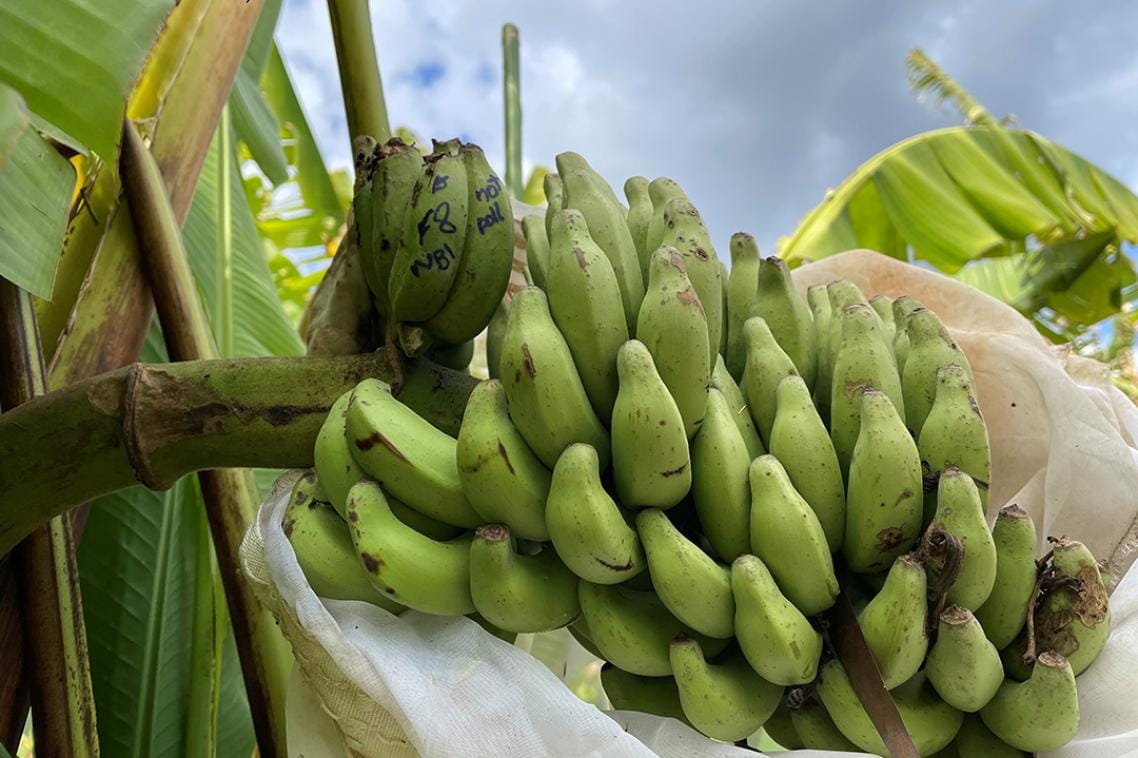
Dr Andrew Chen and Professor Elizabeth Aitken discovered the resistance within a wild diploid banana known as Calcutta 4.
The soil-borne disease, commonly referred to as Panama disease, attacks the plant’s vascular system, causing it to wilt and die while leaving fungal spores in the soil that can infect future crops.
By crossbreeding resistant wild bananas with susceptible varieties and exposing successive generations to STR4, the team compared DNA from plants that survived with those that did not. Their analysis mapped resistance to chromosome 5 in Calcutta 4 — marking the first time Race 4 resistance from this wild subspecies has been genetically identified.
The ambitious five-year project, carried out by the university’s School of Agriculture and Food Sustainability, required patience.
Each generation of banana plants had to be grown for at least a year before flowering, testing and further breeding could take place.
Researchers combined forward genetics, genome sequencing and bulked segregant analysis to isolate the resistant region.

While Calcutta 4 carries vital resistance genes, it is not suitable for commercial farming due to poor fruit quality. The next phase will focus on developing molecular markers so breeders can identify resistant seedlings quickly and accurately — long before disease symptoms appear.
The goal is to produce a commercially viable banana that is good to eat, practical to grow and naturally protected from Fusarium wilt.
STR4 affects bananas in subtropical regions worldwide and is genetically related to Tropical Race 4 (TR4), a more aggressive strain already present in Australia.
The research, supported by Hort Innovation through banana industry levy funds and Australian Government contributions, has been published in Horticulture Research.
The findings are expected to guide future breeding programmes and strengthen global banana production against one of its most serious threats.