Chilean Wasp Named in Honour of Sir David Attenborough’s 100th Birthday

By Conservation Correspondent
Scientists at the Natural History Museum in London have identified a new genus and species of parasitic wasp in its collections — and named it in honour of broadcaster and natural historian Sir David Attenborough to mark his 100th birthday.
The discovery was led by Dr Gavin R. Broad, Principal Curator of Insects, and highlights the value of museum collections in uncovering species that have been overlooked for decades.
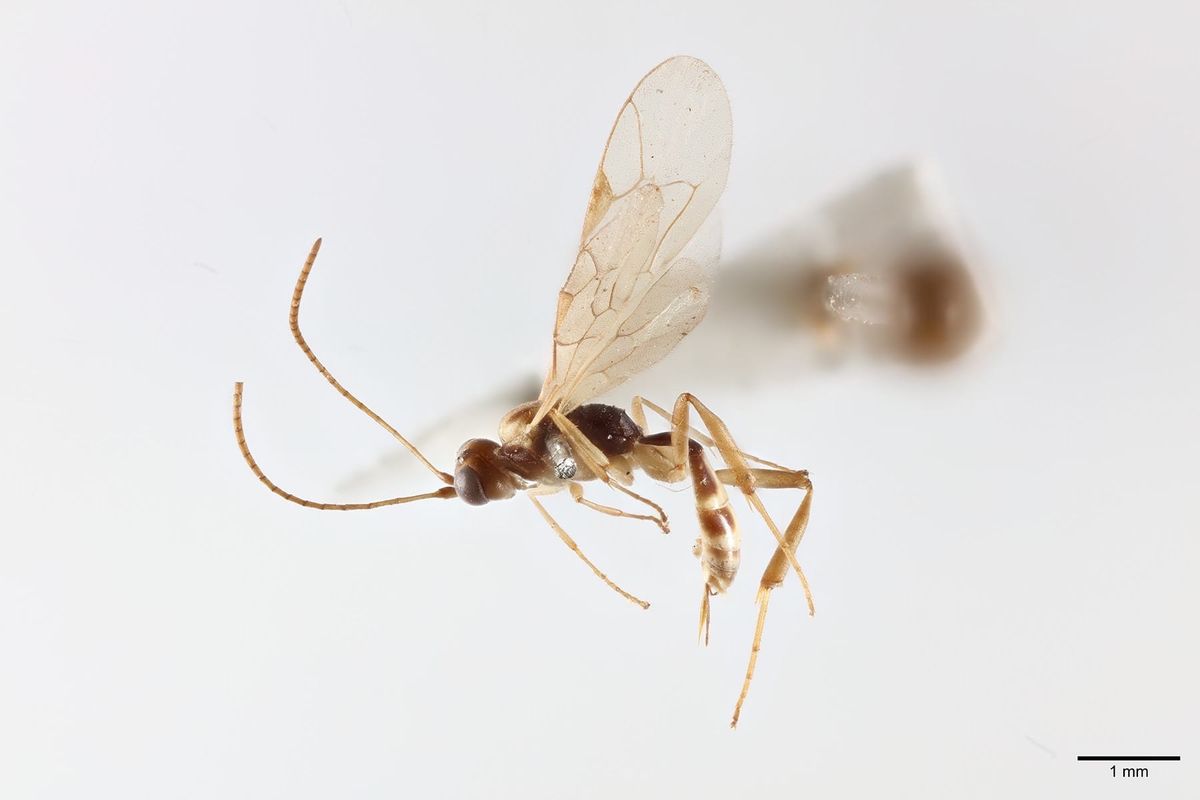
The insect has been named Attenboroughnculus tau in recognition of Attenborough’s long-standing influence on natural history.
The “tau” refers to a distinctive T-shaped marking on the wasp’s abdomen.
Attenborough has often featured parasitoid wasps in his documentaries, and researchers said his programmes played a key role in inspiring generations of scientists.
Dr Broad said he was first encouraged into taxonomy after watching Attenborough’s early series.
The wasp itself is just 3.5mm long and was originally collected in Chile’s Valdivia Province in 1983, a region that has featured in Attenborough’s wildlife films.
Although it had been in the museum’s collections for more than 40 years, it was only recently identified during a detailed review by volunteer Augustijn De Ketelaere. Researchers found a mix of unusual features, including a curved abdominal segment and distinctive wing and ovipositor structures that set it apart from related species.
 Good News Post
Its identification means a new genus has had to be created, increasing the known diversity within this small group of wasps.
The Natural History Museum says the discovery underlines why older collections still matter, particularly as part of ongoing efforts to digitise and re-examine specimens through its NHM Unlocked programme.
To mark Attenborough’s birthday, the museum is also running Our Story with David Attenborough, an immersive exhibition celebrating his work and environmental message.
His quote — “The future of the natural world, on which we all depend, is in our hands” — is also displayed in the museum gardens.
Jennifer Pullar, Science Communications Manager at the museum and co-author of the study, said:
“There are still many discoveries waiting in collections. We hope this encourages scientists to take another look.”
The paper, The description of a new genus of Pedunculinae (Hymenoptera: Ichneumonidae) from Chile and a key to the world genera, is published in the Journal of Natural History.