
Durham Food Waste Turned Into Renewable Energy for Thousands of Homes

By Community Correspondent
Food waste collected from households across County Durham is being transformed into renewable energy and agricultural fertiliser, rather than being sent for disposal.
Around 9,000 tonnes of food waste collected from residents each year is now being processed by Organic Waste Solutions at the Wardley Anaerobic Digestion facility near Gateshead.
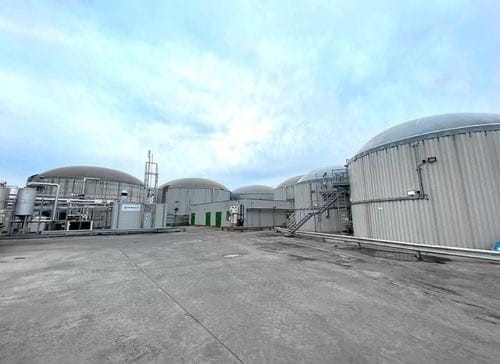
The waste is used to produce renewable energy that could help power up to 10,000 homes across the North East, while the remaining material is turned into a nutrient-rich bio-fertiliser for agricultural land.
The scheme follows new legislation requiring all local authorities in England to introduce household food waste collections.
 Good News Post
Durham County Council is among the first councils in the region to begin rolling out the service, which is now available across the county.
Once collected, food waste from County Durham residents is transported to the Wardley facility, where it is broken down through anaerobic digestion.
This process creates biogas, which is injected directly into the National Grid, and digestate, which is used by farmers to help grow future crops.
Harry Tomlinson, Commercial Manager at Organic Waste Solutions, said the project showed the value of treating food waste as a resource.
"Durham County Council has been a committed partner throughout this process, and it’s great to see collections now underway across the county.
"The Wardley facility is well-placed to handle this volume, and what the figures show is the genuine scale of what becomes possible when local authorities treat food waste as a resource rather than a disposal problem."
 Good News Post
Councillor Kyle Genner, Durham County Council’s Cabinet member for neighbourhoods, environment and police relations, said the new service would bring benefits for residents, energy production and local agriculture.
"Following the government’s introduction of the food waste recycling scheme, we are working hard to implement the service across the county.
"This partnership will support our growing demand for energy and bring tangible benefit to our economy and farmers. We’re always on the lookout for great partnerships to help us deliver for residents, and we’re hopeful that’s what this partnership will prove to be."
The Wardley facility is now processing food waste collected from across County Durham as more councils introduce separate food waste collections under the new national requirements.