
London Ambulance Service Hits Fastest Response Times Since Covid

By Health Correspondent
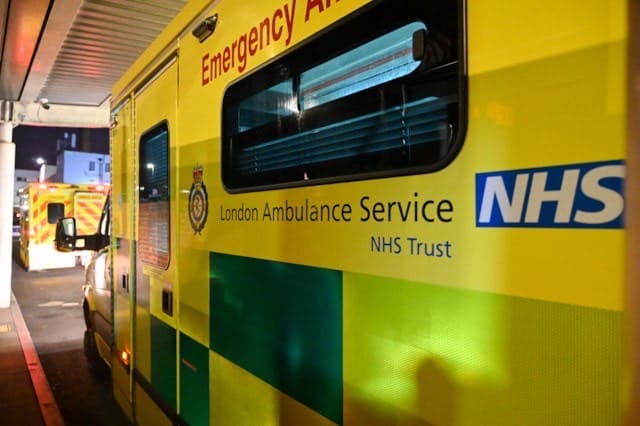
Performance data for the 2025/26 year shows that London Ambulance Service has achieved its fastest response times since the height of the Covid pandemic, despite a surge in the number of 999 calls.
Figures released this week show that in the financial year 2025/26, response times for ambulance crews reaching the most critically ill patients, known as Category 1 calls, were the fastest in four years.
The response times for Category 2 calls – emergencies which include strokes, difficulty breathing and chest pains – were the best in five years.
And despite LAS crews helping an additional 50,000 patients and receiving 132,000 more 999 calls and 88,000 more 111 calls than the year before, the country’s busiest ambulance service still shaved 26 seconds off its response times for Category 1 and seven minutes off Category 2 calls.
Jason Killens KAM, Chief Executive at London Ambulance Service, said:
“I am very proud of the efforts of everyone at London Ambulance Service – whether working in our control rooms, on ambulances or keeping our vehicles on the road – for delivering these improvements in performance and the care we are providing to Londoners.
“We’re working more innovatively than ever to ensure patients can get the right care from us when and where they need it – and that may not be at a hospital. We now take fewer than half the patients we see to hospital and either treat them at the scene or refer them to a more suitable place for help. We are treating an increasing number over the phone too.
“We have more work to do and will continue to focus on improving our response times. But today’s figures are testament to a huge effort by our people in the face of growing demand for our services.”
The newly published figures mean LAS met its 7-minute performance targets for Category 1 calls.
 Good News Post
For Category 2, LAS was more than two minutes inside the 32 minute 30 second performance target agreed with London’s NHS commissioning bodies and just seconds outside the 30-minute target set nationally by NHS England.
To achieve these improvements, LAS bolstered the Service’s fleet at peak times and put on the equivalent of 125 additional ambulance shifts per week.
Importantly, all of this was delivered within the organisation’s planned budget.
The Service has also introduced a number of different ways of working. Clinicians at the Service’s clinical hub have helped to bring down response times by providing expert assessments to patients over the phone – known as ‘hear and treat’ – to avoid people going to busy hospitals when it’s not necessary. Almost one in five 999 calls is now handled this way.
The clinicians have trialled an AI tool – which uses Ambient Voice Technology – to increase the number of patients that they treat each shift. The technology digitally transcribes conversations between clinicians and patients into structured medical notes.
 Good News Post
Meanwhile, the Service has reduced the age of the vehicles in its fleet and set up out of hours mechanic workshops where vehicles can be repaired overnight, meaning ambulances spend less time off the road and crews can care for more patients without delay.