Miracle Monkey Mum: Rare Primate Gives Birth After Life-Saving Surgery

By Animals Correspondent
A critically endangered monkey has stunned keepers by giving birth — just months after a groundbreaking operation saved her from losing her foot.
Masaya, a 15-year-old roloway monkey at Chester Zoo, underwent a complex, first-of-its-kind surgery last summer after a golf-ball-sized mass threatened to lead to amputation.
In a remarkable joint effort with experts from the University of Liverpool Small Animal Teaching Hospital, vets managed to save her limb — with Masaya losing just one toe.
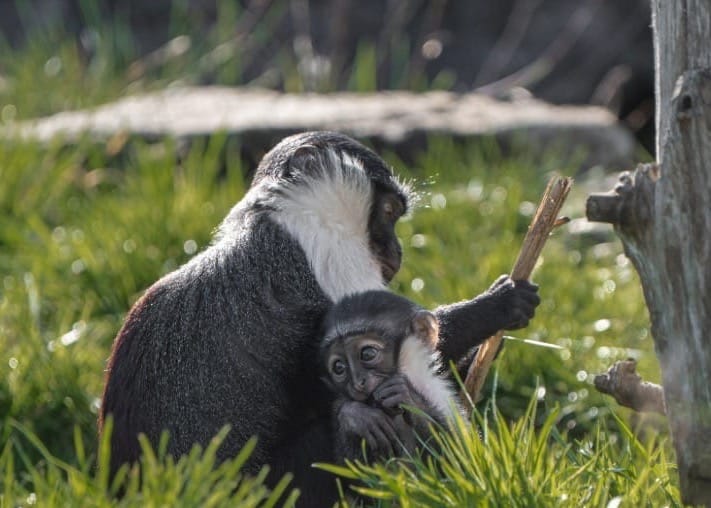
Now, in an incredible twist, she’s welcomed a baby daughter named Lagertha — and keepers say the tiny primate is already full of personality.
Rachel Burrow, who helped carry out the procedure, said the operation was a last-ditch effort.
“This was the last chance to save Masaya’s foot before amputation… it was a real privilege to care for such a rare animal. It’s great to see the surgery was a success — she’s comfortable, active and using the limb well.”
Keepers say Masaya has bounced back brilliantly — and is proving to be a devoted mum once again.
Zoe Edwards, primate keeper at the zoo, said:
“Masaya is a very experienced mum and she’s parenting magnificently… Lagertha is only a few weeks old but already curious and inquisitive.”
She added the outcome could have been very different:
“If she’d had an amputation, we’d have had real questions about whether she could hold her offspring or continue normal behaviours.”
 Good News Post
The birth is a huge moment for the species, with Masaya now raising her third daughter.
Zoe explained just how rare these monkeys are:
“There are only a few breeding females in zoos in Europe — Masaya is incredibly important, not just to her family, but to the species.”
Rolo-way monkeys are among the world’s rarest primates, with fewer than 2,000 left in the wild in Ghana and Ivory Coast due to habitat loss and poaching.
Masaya herself had battled foot problems since arriving at the zoo in 2023, with vets unable to pinpoint the cause despite extensive tests. When her condition worsened, she was taken for advanced scans — leading to the bold decision to operate.
Charlotte Bentley, from the zoo’s Animal Health Centre, said:
“It’s not every day you take a monkey to vet school… she’s been an absolute trooper, and we’re just glad we could help.”
Today, Masaya and baby Lagertha — named after a Viking queen — can be seen thriving together, offering a rare and hopeful glimpse for a species fighting for survival.
Find out more about the zoo’s Animal Health Centre at www.chesterzoo.org/animalhealthcentre