Tiny foal marks big step for wild horses in Kazakhstan

By Conservation Correspondent
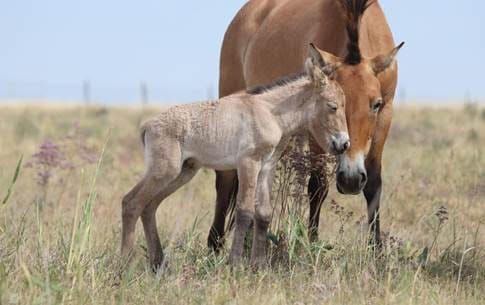
A tiny new arrival has given conservationists a huge reason to celebrate after the first Przewalski’s horse foal was born in Kazakhstan.
The male foal was born on August 22 at the Alibi Reintroduction Centre in the Altyn Dala State Nature Reserve in Central Kazakhstan.
His arrival is a major milestone in an international project to return the world’s last surviving species of truly wild horse to the steppes where it once roamed.
The work is supported by the Altyn Dala Conservation Initiative, winner of the 2024 Earthshot Prize, which recognises pioneering environmental projects around the world.
Just moments after being born, the foal was on his feet, following his mother before beginning to nurse.
 Good News Post
His seven-year-old mother, Tessa, arrived from Tierpark Berlin in 2024 as one of the first seven Przewalski’s horses brought to Kazakhstan. It is her first foal.
The horses spent a year acclimatising to their new surroundings before being released into the wider reintroduction programme.
The birth is particularly significant because Przewalski’s horses disappeared from the wild during the 20th century.
They survived thanks to international breeding programmes and zoo populations, and are now being carefully returned to parts of their former range.
Daniyar Turgambayev, Chairman of Kazakhstan’s Forestry and Wildlife Committee, said the birth was “a landmark event” and an important sign that the horses had successfully adapted to their new home.
“We hope that the number of kertagy will grow year by year and that their return will make an important contribution to the restoration of Kazakhstan’s steppes,” he said.
 Good News Post
Conservationists will continue to monitor the young foal and the herd as they adapt to life in the steppe.
The long-term aim is to establish a healthy, self-sustaining population of Przewalski’s horses living in the wild.
For now, however, there is simply the joy of seeing a new generation begin.
The foal’s name will be chosen by Kazakhstan’s Committee for Forestry and Wildlife and announced shortly.