From Classroom to Lab: Pupils Explore the Air they Breathe

By Education Correspondent
Pupils from Bristol, Luton and Pembrokeshire have helped create a new children’s book about airborne microfibres after taking part in research with the University of the West of England.
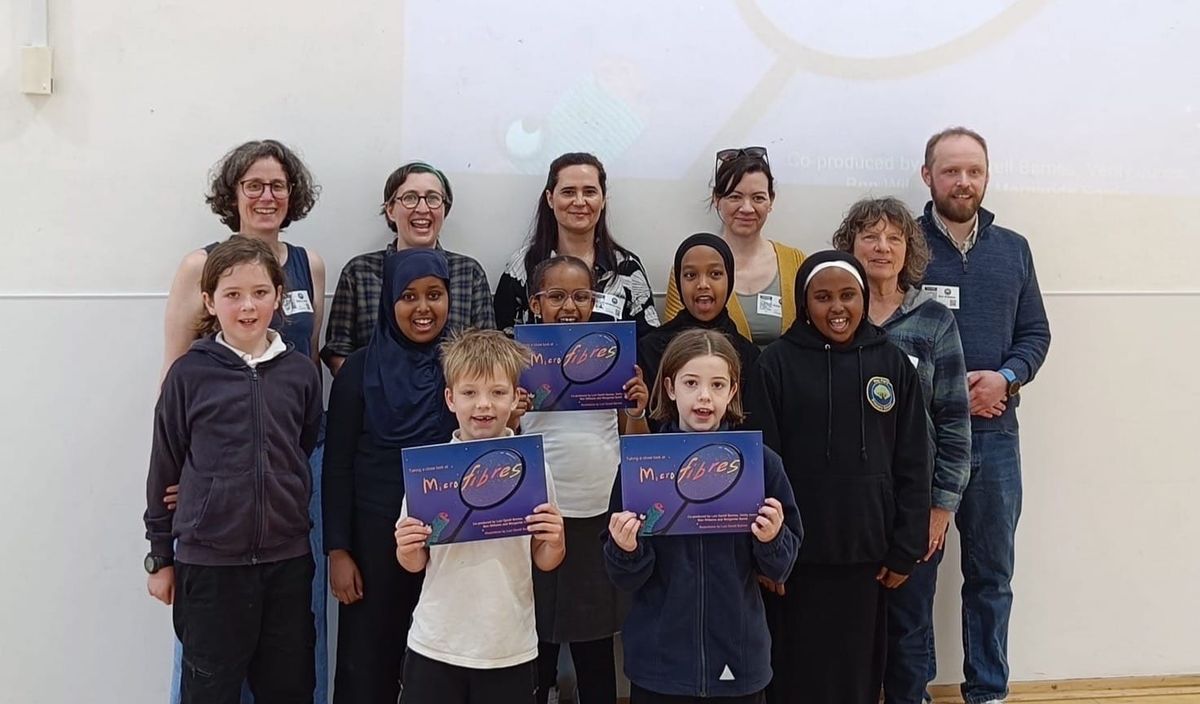
The book, Taking a Close Look at Microfibres, was launched on Earth Day at May Park Primary School, one of the schools involved in the Schools Under the Microscope project.
The project involved pupils aged 9–11 in a child-led citizen science study exploring airborne microfibres in their classrooms.
After an initial pilot with 90 pupils, it expanded to around 400 children across four schools. It is the first time this type of data has been collected in school environments.
Nat Brown, a Year 6 teacher at May Park Primary, said:
“In most science lessons… you already know the outcome.”
“This was different… we were exploring something new together.”
Pupils followed structured lesson plans, placing Petri dishes around their schools for two weeks to collect samples. They later used microscopes to count fibres, with further analysis carried out by UWE Bristol researchers.
 Good News Post
Dr Verity Jones, Associate Professor in Education at UWE Bristol, said:
“Microfibres are well documented in water… far less is known about those in the air.”
“This allowed us to collect school-based data for the first time and develop a new educational resource.”
Findings showed that fibre levels in schools were similar to those found in homes, including both natural and synthetic materials—some matching school uniform colours.
Dr Jones added:
“Pupils and teachers enjoyed contributing to real research.”
“It also helped make invisible air pollution more meaningful.”
The book launch took place during a school assembly in Eastville, Bristol. Nat Brown added:
“The children really took ownership… access to high-quality equipment made a big difference.”
The book’s content was shaped by pupils’ questions and observations, offering a resource for schools and families to learn more about air quality.
Dr Margarida Sardo, Senior Research Fellow in Science Communication, said:
“It helped show what scientists do… not just ‘potions and making things explode’.”
Illustrations were created by artist Luci Gorell Barnes using scanned recycled materials that shed microfibres, forming digital collages.
The book is available as an e-copy and will also be placed in Bristol libraries and local schools.
The project team is now working with the Global Goals Centre on the Better Uniform Campaign, which aims to improve the sustainability and fairness of school uniforms.