Incredible and never-to-be-forgotten: UK prepares for rare solar eclipse

By Bethany Garty, Community Correspondent
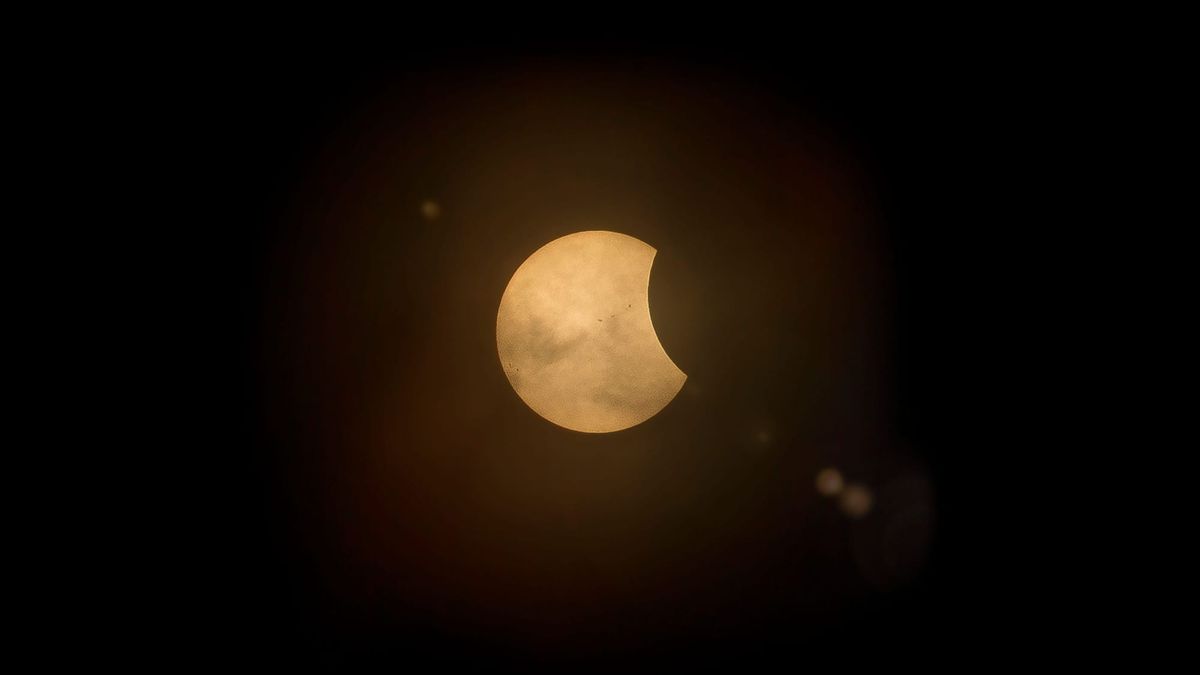
A solar eclipse will take place on Wednesday, 12 August, with around 90-96% of the Sun covered across the UK, depending on location.
It will be the closest to a total solar eclipse that the UK has seen since 1999.
A solar eclipse happens when the Moon moves between the Earth and the Sun, causing the Sun's light to be partially blocked.
Cathy Brodie, a resident of Kettering, watched the phenomenon in 1999 and said it was an “incredible and never to be forgotten experience”.
The best time to watch the eclipse in the UK will be after 7pm, although the exact time will vary depending on where you are. In Kettering, for example, the eclipse will reach its maximum at around 7.11pm.
The evening will certainly be one to remember.
Christian Hill, from Thrapston, vividly remembers watching the eclipse all those years ago.
He said: “I drove down to Cornwall on a last-minute whim and slept overnight in the back of my car with my wife, as there was no accommodation left.
“In the morning, we couldn’t get near the organised events, so we found a small coastal village and stood on a cliff edge.
“It was weirdly ominous when it started to go dark and the temperature dropped.
“There was silence when it eclipsed and a big cheer when the Sun came back.”
Other people have described the experience as ‘fascinating’, ‘amazing’ and ‘strange’.
How to watch the eclipse safely
It is important not to look directly at the Sun during the eclipse.
This is because the dim light can trick the eyes into not squinting or looking away, meaning the eyes can be exposed to harmful solar radiation.
During the eclipse, the pupils can widen because it becomes darker, allowing more light to enter the eye. Looking directly at the Sun can cause serious damage to the eyes.
Specialised eclipse glasses can be bought, but not ordinary sunglasses. Safe eclipse glasses should be labelled with the ISO 12312-2 safety standard.
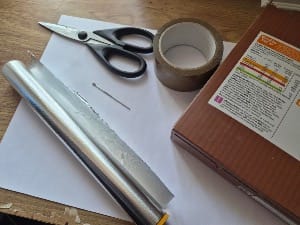
A homemade pinhole camera is another way to watch the eclipse safely.
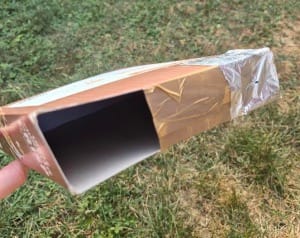
The small hole in the foil allows an image of the Sun to be projected onto a surface, so you can see the eclipse without looking directly at the Sun.
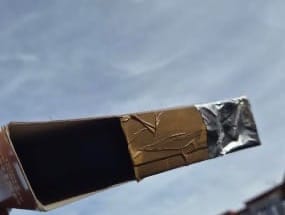
The video below shows how to make a simple pinhole camera and how it can be used to watch the eclipse.
You can also watch the eclipse online. Click here for different streaming options.
The next total solar eclipse visible from the UK will be in 2090, so this will be a rare chance to see a near-total eclipse from Britain.