
New Technique Could Speed Up Search for Virus-Based Alternatives to Antibiotics

By Science Correspondent
Scientists have developed a faster, lower-cost way to study viruses that could one day help treat infections where antibiotics no longer work.
A research team at the University of Leicester has created a new method to analyse bacteriophages — viruses that infect and destroy harmful bacteria — more efficiently.
Phage therapy is being explored as an alternative to antibiotics, particularly as resistance to existing drugs continues to grow.
Unlike antibiotics, phages can target specific strains of bacteria without affecting others.
One of the main challenges has been identifying and analysing the most useful phages. While many can be found in the environment, studying their genetic make-up has typically been slow, expensive and dependent on large amounts of purified material.
This has meant that many potentially useful phages are not fully explored.
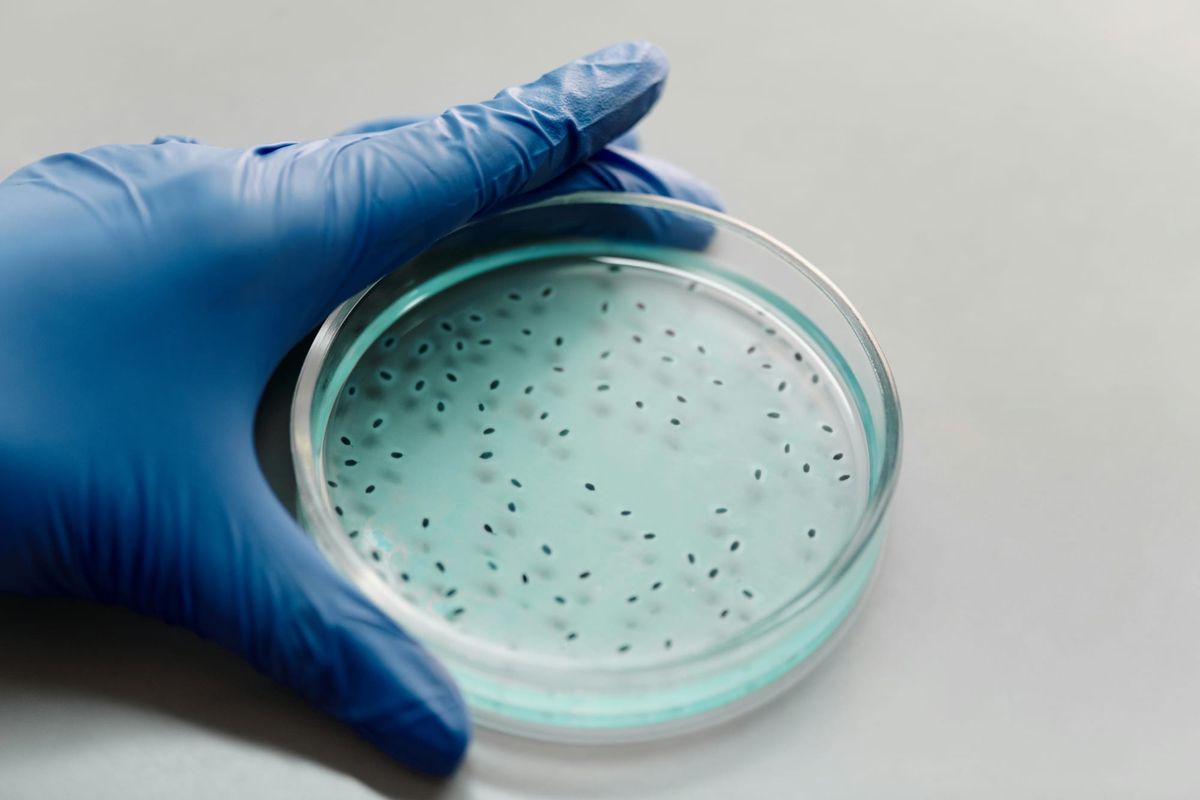
Researchers at the University’s Becky Mayer Centre for Phage Research have now developed a way to sequence phage genomes directly from individual plaques — the small clear areas formed when phages break down bacteria in lab samples.
 Good News Post
The method uses a minimal amount of DNA alongside Oxford Nanopore sequencing, allowing genomes to be analysed more quickly and with fewer resources.
The findings have been published in Microbiology Society.
Doctor Andrew Millard, Co-lead of the University’s phage centre, explained:
“Because the method works from very small amounts of material, it eliminates the need for large-scale phage purification and transforms the speed at which hundreds of genomes can be analysed from months, to less than a week.
“This pioneering breakthrough means that there is potential to find and understand many more bacteriophages to fight disease and scale up the quantities available and allow us to focus on the best phages.”
The team says the approach could support efforts to build larger, well-characterised collections of phages for research and future therapeutic use.
Professor Martha Clokie, who also leads the University’s Becky Mayer Centre for Phage Research, said:
“This is a vital step towards making phage therapy a practical reality. Antimicrobial resistance is already responsible for around five million deaths each year globally, and without new solutions this will only increase.
“By enabling us to rapidly identify and develop the best phages, this approach brings us much closer to delivering a new class of precision medicines.”
The researchers are now using the method to expand their phage libraries, with the long-term aim of supporting the development of targeted treatments for drug-resistant infections.