
Canals could give millions of people a cooler escape from summer heat, new research finds

By Science Correspondent
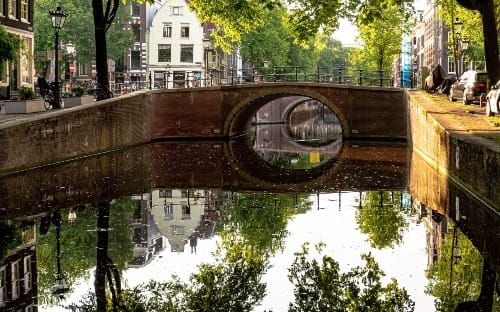
Urban canals can cut nearby temperatures by more than 2°C during heatwaves, potentially offering millions of people a natural way to escape the worst of summer heat, new research has found.
A study by researchers at The University of Manchester found that canals reduce daytime temperatures in their immediate surroundings by an average of around 0.8°C.
During heatwaves, however, the cooling effect rises to between 1.5°C and 2.3°C.
The research is believed to be the first national-scale assessment of the cooling effect of urban canals, examining more than 2,300 canal sections across Great Britain and Ireland.
Around 6.2 million people live within one kilometre of Britain's urban canal network, meaning millions could potentially benefit from the cooling effect.
The researchers also found that canals could significantly reduce the amount of time people are exposed to heat stress.
Their modelling showed that the number of hours classified as posing a moderate heat risk fell by around 58%, while hours of high heat risk fell by around 74% when the cooling effect of canals was included.
 Good News Post
In some locations, periods of extreme heat risk disappeared altogether, although the researchers caution that higher humidity around waterways can partly offset the benefits.
Lead author Dr Matt Tomkins said canals could become an important part of how cities adapt to climate change.
“As climate change makes heatwaves more frequent and intense, cities need every available tool to help people stay safe and comfortable.”
“Our research shows that canals, which were originally built to power the Industrial Revolution, could now play an important role in helping cities adapt to climate change.”
The cooling effect was generally strongest within 20–50 metres of the water, and reached around 1.2°C to 1.4°C during spring and early summer.
The study found that canals produce a small warming effect overnight because water retains heat for longer than surrounding surfaces, but researchers say this is relatively minor compared with the daytime cooling benefits.
 Good News Post
Dr Tomkins said canals had often been overlooked in discussions about climate resilience.
“Our findings suggest they should be recognised as part of climate-responsive urban design alongside green spaces, particularly because millions of people already live and work within walking distance of the canal network.”
The researchers say cooler canal-side routes could also encourage people to continue walking and cycling during hot weather, while providing access to nature and potentially reducing reliance on cars and energy-intensive air conditioning.
Co-author Dr Joanne Tippett said the findings highlighted the wider benefits of protecting and improving access to urban waterways.
“The cooling that canals offer could help more people to stay active and access these spaces even during hot days.”
The researchers stress that canals are not a solution to rising urban temperatures on their own, but could form part of a wider approach alongside parks, trees, sustainable drainage and other green and blue infrastructure.
The study also provides a new modelling approach that could be used to assess the cooling potential of urban waterways in other cities around the world.
Research reference: Tomkins, M., McDonald, H., Huck, J., Tippett, J., Elliot, S., Harris, E. & Maxwell, C. (2024), Modelling the cooling effects of urban canals, GISRUK 2024, University of Leeds. University of Manchester Research Explorer