Stickleback fish change behaviour to find food in cloudy water, study finds

By Science Correspondent
Stickleback fish can change the way they behave in groups to help them find food when the water around them becomes cloudy, a University of Bristol study has found.
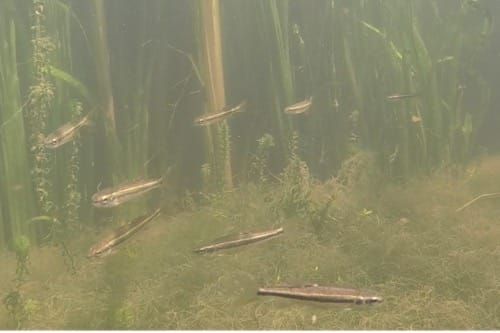
Researchers from the university’s School of Biological Sciences looked at shoals of three-spined sticklebacks and how they responded when the water became increasingly murky.
They also watched how quickly the fish reacted when food was suddenly introduced.
The study, published in Proceedings of the Royal Society B on Wednesday 2 September, found that fish took longer to move towards food in cloudy water than they did in clear conditions.
However, the size and behaviour of the group made a difference.
Fish in larger groups generally responded more quickly, while in smaller groups living in murky water, the fish reached food faster when they stayed close together and swam in the same direction.
The researchers also noticed changes in the fish before food was introduced. In cloudy water, they tended to swim closer together, align their movements more closely and pay more attention to the movements of other fish, particularly when they were in smaller groups.
DON'T MISS:
 Good News Post
Turbidity, the term used for cloudy or murky water caused by particles such as mud, silt and algae, can reduce visibility for aquatic animals.
It is increasing in some rivers and coastal waters as a result of activities including farming, mining, construction and pollution.
Three-spined sticklebacks are common in ponds, streams and rivers across the Northern Hemisphere and can experience a wide range of water conditions.
Professor Christos Ioannou, Professor of Behavioural Ecology at the University of Bristol and the study’s corresponding author, said the fish took longer to find food in cloudy water, but were able to compensate by changing their shoaling behaviour.
“They became more coordinated, with the fish moving and aligning themselves together much more closely in poor conditions,” he said.
Dr Sean Rands, Senior Lecturer and co-author of the study, said the findings showed that the fish were able to change their behaviour depending on the environment.
The researchers said this could be important as rivers and streams experience sudden changes in water conditions, including periods of heavy rain which can cause muddy, highly turbid water.
The study suggests that changing how they move and interact with one another gives sticklebacks a way of dealing with the reduced visibility caused by murky water.