New Retinal Implant Helps Blind Patients with AMD Read Again

By Health Correspondent
A European clinical trial, published in The New England Journal of Medicine, found that 84% of participants regained the ability to read letters, numbers, and words using a new retinal implant in an eye blinded by geographic atrophy from dry age-related macular degeneration (AMD).
Patients, who previously had no central vision, could read an average of five lines on a vision chart post-surgery. The trial involved 38 patients across 17 hospitals in five countries. Moorfields Eye Hospital was the UK’s sole site.
The implant, called PRIMA, is a wireless subretinal photovoltaic chip developed by Science Corporation. It is 2mm x 2mm, thinner than a human hair, and works with augmented-reality glasses that project an infrared image onto the chip. This signal is processed by AI algorithms and transmitted to the brain as visual information.

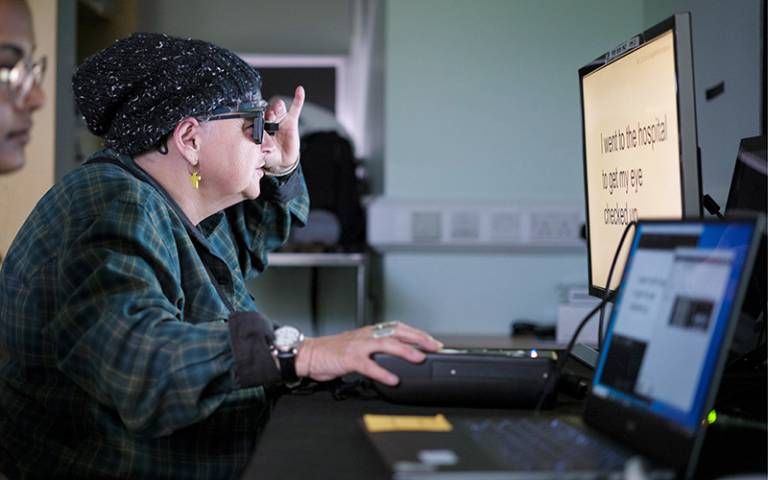
The surgery, performed in under two hours, involves inserting the chip under the retina. After healing, patients begin using the glasses and a wearable computer to interpret visual input. Intensive rehab helps them learn to read again.
No significant loss of peripheral vision was observed, and the trial showed real potential to restore useful central vision in patients with untreatable GA.
Mr Mahi Muqit, associate professor in the UCL Institute of Ophthalmology and senior vitreoretinal consultant at Moorfields Eye Hospital, who led the UK arm of the trial, said:
“In the history of artificial vision, this represents a new era. Blind patients are actually able to have meaningful central vision restoration, which has never been done before.
Patient Sheila Irvine shared how she’s now able to read, do crosswords, and read tiny prescription labels—experiences she had lost due to AMD.
The study was led globally by Dr. Frank Holz at the University of Bonn. The PRIMA system is awaiting approval for wider clinical use.
If you have a positive story or uplifting news to share, we’d love to hear from you!
Just email us at news@goodnewspost.co.uk.
Whether it's a local hero, an act of kindness, or a personal win, your story could help spread joy and improve someone’s mental health. Let’s make the world a little brighter, one good news story at a time.
And don’t forget—you can sign up for free to get the latest feel-good stories straight to your inbox!